
5 Best Pillows for Shoulder Pain (2026)

Spine & Posture Specialist · Austin, TX
Last updated: November 21, 2026 · 9 min read

When your shoulder already hurts, the night is often the worst part: the pain that wakes you at 3 a.m., and the shoulder that's even stiffer by morning.
A lot of that comes from the pillow. All night, the shoulder you lie on carries part of your upper body weight, pressed between your torso and the mattress. If the pillow is too low, your head drops toward that shoulder and the muscles around the joint never let go. Too high, and the neck bends the other way. Either way, an injured or inflamed shoulder spends eight hours under load instead of resting, and you wake up worse than you went to bed.
Most "best pillow" lists pick the softest or most popular pillow. We ranked them on one question only: does it take the load off your shoulder and keep it off all night?
We looked at the pillows that come up again and again in shoulder pain reviews, and scored them as if your shoulder were the only thing that mattered. Comfort, softness and brand name didn't count. That's why the order here is different from most lists: several of the most recommended pillows have no room for the shoulder at all.
Four things decided the ranking.
What a pillow has to do for shoulder pain
Each one decides whether you wake up with a sore shoulder. Every pillow in this ranking is scored on them:
Does the shoulder have somewhere to go?
On your side, the bottom shoulder needs to drop slightly in and forward. A cutout lets it. Without one, it's pinned flat under your body weight for hours.
Is the height right for your shoulder width?
The pillow has to fill the gap between your ear and the outside of your shoulder. Too low and your head sags onto the shoulder; too high and your neck bends the other way.
Does it hold that height all night?
Shredded fill and soft fiber move and sink. The height you set at bedtime is gone by 3 a.m., and the shoulder takes the load again.
Does it work when you roll onto your back?
A sore shoulder makes you change position more. The pillow has to support you on your back too, not just on one side.
Only one pillow passed all four. Here's the full ranking.
The 5 Best Pillows for Shoulder Pain, Ranked

Align Pillow™ Elite
- Butterfly cutouts take the load off your bottom shoulder
- Two heights, 4" or 5": matched to your shoulder width
- Molded foam holds that height all night
- Works on your back too, 100-night trial
- Firmer than a regular pillow
- 2–3 nights to get used to it
How it compares
Shoulder: The butterfly cutouts let your bottom shoulder drop slightly forward and in, so it rests beside the pillow instead of under it. The pressure on the joint drops, and so does the brace-all-night tension in the muscles around it. That's the difference between waking up with a sore shoulder and a numb arm, and waking up without them.
Height: Shoulder width decides the height you need. The Elite has two edges: start on the 4" side, and turn the pillow around to the 5" side if your head still tips toward the mattress. Broad shoulders usually end up on the 5" edge. The molded foam keeps that height all night, so the shoulder doesn't take the load back at 3 a.m.
Neck: A sore shoulder and a stiff neck usually come together. The cervical contour supports the curve of your neck, so your head doesn't sag toward the painful side.
Ear: The Zero Pressure Zone™ recess gives your ear room on your side, one less reason to keep shifting your weight onto the shoulder.
On your back: When the shoulder needs a break, roll onto your back: the center hollow cradles your head and the contour holds your neck, so you don't need a second pillow.
One honest note: the first 2–3 nights can feel unfamiliar if you're used to a soft pillow you fold in half. Judge it on your mornings in week two, not on night one. That's what the 100-night trial is for: if it isn't right for you, get refunded, no return needed.
See Today's Black Friday Offer

Eli & Elm Side-Sleeper Pillow
- Curved notch gives the shoulder some room
- Fill can be removed to lower the height
- Recognizable side-sleeper shape
- About 6" tall out of the box, too high for many
- Shredded fill shifts during the night
- Needs its own pillowcase
How it compares
Why it's not #1
Notch, not a cutout: the bottom shoulder still carries the weight
Loose fill means the height drifts during the night
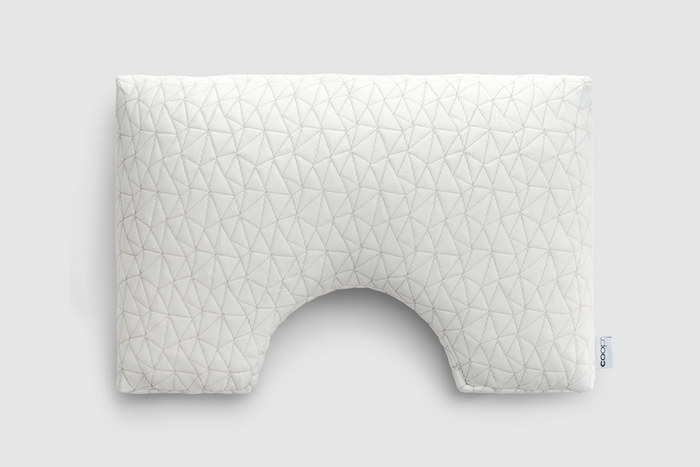
Coop Original Cut-Out Pillow
- Real cutout for the shoulder
- Adjustable shredded foam fill
- Lower price
- Fill clumps and shifts, needs regular fluffing
- No neck contour
- Heat and smell complaints in reviews
How it compares
Why it's not #1
No neck contour, so the neck can still bend toward the sore shoulder
Shredded fill sinks under the head during the night
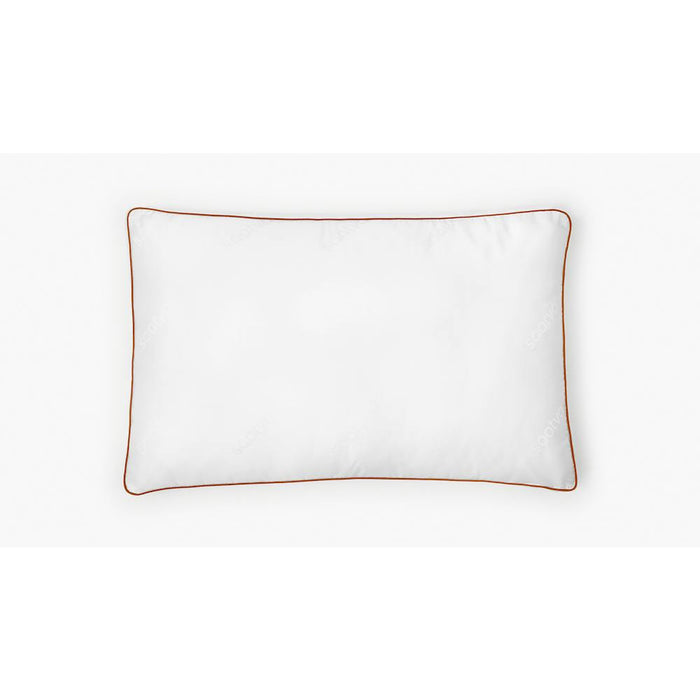
Saatva Latex Pillow
- Soft, hotel-style feel
- Latex core is more resilient than fiber
- Removable inner pillow changes the height
- No shoulder cutout or contour
- Expensive for a standard shape
- Can feel too tall for slimmer builds
How it compares
Why it's not #1
No cutout: the bottom shoulder takes the full load
Premium price for a standard pillow shape
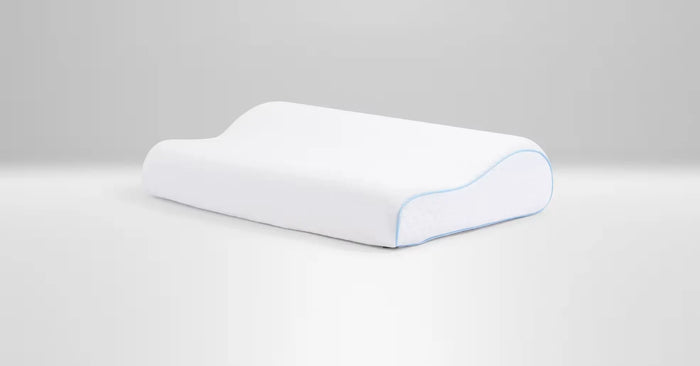
TEMPUR-Neck Pillow
- Dense foam that holds its shape
- Good neck contour on your back
- Several sizes
- No shoulder cutout
- Very firm, hard on the ear on your side
- No trial and no returns
How it compares
Why it's not #1
No shoulder cutout, and the firm edge presses into the shoulder
No trial: if the size is wrong, you keep it
How to find the right pillow height for your shoulder
Every review says a pillow should "fill the gap between your head and your shoulder." Here's how to actually measure that gap, in two minutes, with a tape measure and a friend.
- 1. Measure your shoulder: stand against a wall and measure from the side of your neck, at the base, to the outer edge of your shoulder. That's roughly the gap your pillow has to fill on your side.
- 2. Adjust for your mattress: on a soft mattress your shoulder sinks in, so you need a little less height. On a firm mattress, a little more.
- 3. Pick the height: about 4" for a gap under 5.5" or a soft mattress; about 5" for a wider gap, broad shoulders or a firm mattress.
The check that matters: lie on your side and have someone look at you from behind. Your spine, neck and head should make one straight line, nose in line with the center of your chest. If your head tips toward the mattress, go higher. If it tips up toward the ceiling, go lower.
The Align Pillow™ Elite has both heights in one pillow: a 4" edge and a 5" edge. Start on the 4" side, and turn it around if your head still tips down. Not sure which Align fits your build? The 60-second pillow quiz picks for you.
See the pillow with both heights →Why a shoulder cutout matters more than softness
The instinct with a sore shoulder is to buy a softer pillow. It rarely helps, because the pillow isn't what's pressing on your shoulder: your own body weight is. On a standard rectangle, your bottom shoulder ends up under the pillow's edge or pinned flat beneath you, and that's where the pressure builds.
A cutout changes the geometry. With a recess where the shoulder meets the pillow, the shoulder can roll slightly forward and in, so you lie on the flat of your shoulder blade instead of the point of the joint. The pillow keeps your head up; the shoulder sits beside it, not under it.
Not every "shoulder" design does that. A curved notch, like the Eli & Elm's, moves the pillow away from the shoulder but still leaves it carrying the weight. An arm pocket, like the MedCline system, gives the arm somewhere to go but needs a wedge and a body pillow to work. A butterfly cutout does it with one pillow, on both sides, so it still works when you turn over.
Rotator cuff, frozen shoulder, bursitis: how to sleep with each
The general rule for almost every shoulder problem: don't sleep on the painful side, and don't sleep with that arm above your head. What changes from one condition to the next is how much support the arm needs.
Rotator cuff pain or tear
Sleep on your back or on the good side. On the good side, hug a pillow in front of you so the painful arm rests on it instead of falling across your body, which pulls on the tendon. On your back, a small pillow under the elbow keeps the arm from dropping behind you.
Shoulder impingement or tendinitis
Avoid any position with the arm overhead or tucked under the pillow: both narrow the space the tendon runs through. On your side, keep the top arm resting on a pillow at chest height; the cutout lets the bottom shoulder sit low without pressing into the joint.
Frozen shoulder
Nights are often the worst part. Back sleeping with the arm supported on a pillow at your side is usually the most comfortable. On your side, only on the good side, with the painful arm supported in front of you.
Shoulder bursitis
Direct pressure is the problem, so never lie on the inflamed side. A pillow that keeps your head high enough on the good side stops you from rolling onto the painful one in your sleep.
After shoulder surgery
Follow your surgeon's instructions first: many people sleep semi-reclined for the first weeks. A pillow comes in later, when you're allowed back to lying flat.
A pillow supports your shoulder at night, it doesn't treat an injury. See a doctor or physical therapist if the pain follows a fall or injury, wakes you every night, comes with weakness or numbness in the arm, or doesn't ease after a couple of weeks.
The best sleeping position for shoulder pain
On your back is the easiest on a sore shoulder: no weight on either joint. The pillow has to hold your neck without pushing your chin forward, which is why a lower center and a neck contour matter.
On the good side is fine for most people, as long as two things are true: the pillow is high enough that your head doesn't sag, and the painful arm is supported in front of you instead of hanging across your body.
On your stomach is the one to avoid. Your head turns fully to one side and your arms usually end up overhead, the worst position for the shoulder joint. For the full position-by-position guide, see how to sleep with neck and shoulder pain. If you wake up with a sore shoulder after side sleeping, start with why side sleeping makes your shoulder hurt.
See the pillow built for side and back →Check the trial before you buy a shoulder pain pillow
The right pillow height is personal, and your shoulder needs about a week to tell you whether a pillow works. That makes the trial almost as important as the pillow. In this ranking, they range from none at all (the TEMPUR-Neck is treated as a personal item, with no returns) to 45 nights (Saatva, Eli & Elm) to 100 nights for the Align Pillow™ Elite.
A week is the minimum to judge it: the first nights on any new shape feel unfamiliar, and the real test is how your shoulder feels in the morning during week two. With the Elite's 100-night trial, if it isn't right for you, get refunded, no return needed.
Frequently Asked Questions
What is the best pillow for shoulder pain?
One that takes the weight off your bottom shoulder and keeps your neck in line: a shoulder cutout, a height matched to your shoulder width (about 4 to 5 inches for most adults), and foam firm enough to hold that height all night. In our ranking, the Align Pillow Elite was the only pillow that did all of it, with butterfly cutouts, a 4 inch and a 5 inch edge, and a cervical contour.
Can a pillow cause shoulder pain?
It can make it worse. A pillow that is too low lets your head drop toward the shoulder you lie on, and one with no room for the shoulder leaves it pinned under your body weight for hours. The joint is compressed and the muscles around it stay tense all night, so you wake up sore. The right pillow height and a shoulder cutout take that load off.
Should my shoulder be on the pillow when I sleep on my side?
No. Your shoulder should rest on the mattress, just in front of the pillow, with only your head and neck on it. If the shoulder is on the pillow, your head is pushed up and the shoulder is wedged. A cutout lets the shoulder tuck in close without being on the pillow.
How do I stop my shoulder hurting when I sleep on my side?
Sleep on the side that does not hurt, roll slightly forward onto your shoulder blade instead of the point of your shoulder, keep your arm in front of you rather than under the pillow, and hug a pillow so the top arm is supported. A pillow with a shoulder cutout and the right height keeps your bottom shoulder from carrying your weight.
Which side should I sleep on with shoulder pain?
The side that does not hurt, or on your back. Lying on the painful shoulder presses directly on the inflamed joint. On the good side, support the painful arm on a pillow in front of you so it does not fall across your body.
What is the best pillow for rotator cuff pain?
One that lets you sleep on your back or your good side comfortably, so you are not tempted to roll onto the painful shoulder. Look for a shoulder cutout, a height that keeps your head level on your side, and a contour that supports your neck on your back. Add a second pillow to hug or to rest the painful arm on.
Is a firm or soft pillow better for shoulder pain?
Medium-firm to firm, with a cutout. A soft pillow sinks under your head, so your neck bends toward the shoulder and the shoulder takes more weight as the night goes on. Firm foam holds the height; the cutout, not the softness, is what relieves the shoulder.
Why does my shoulder hurt more at night?
Lying down puts pressure on the joint for hours without moving, inflammation tends to feel worse when you are still, and the wrong pillow can keep your shoulder compressed all night. Many people feel it most in the early hours of the morning.
Why does my arm go numb when I sleep on my side?
Usually because your arm is under the pillow or you are lying on the point of your shoulder, which pins the shoulder and presses on the arm. Keep the arm in front of you and use a pillow with a shoulder cutout so you do not need to tuck your arm underneath to get comfortable.
How long does it take to get used to a new pillow?
Most people need 2 to 3 nights, sometimes up to a week if they are used to a soft pillow they fold in half. Judge it on how your shoulder feels in the morning during week two, not on night one.
What if the pillow does not work for me?
The Align Pillow Elite comes with a 100-night trial. Sleep on it for up to 100 nights, and if it is not right for you, get refunded, no return needed.
Get the Align Pillow™ Elite →